


If you’ve done some research on Search Engine Optimisation (SEO), then you’ve almost certainly come across the acronym E-E-A-T. Google uses E-E-A-T as a framework within its Search Quality Rater Guidelines to describe what credible, helpful content looks like.
But what is E-E-A-T? What does it stand for, and how do you turn it into practical trust signals?
In this guide, we’ll explain what Google looks for in content and how to strengthen E-E-A-T across your website.
What is E-E-A-T?

To understand E-E-A-T better, it helps to know that Google uses human quality raters to assess search results. These raters are trained to evaluate E-E-A-T-related qualities.
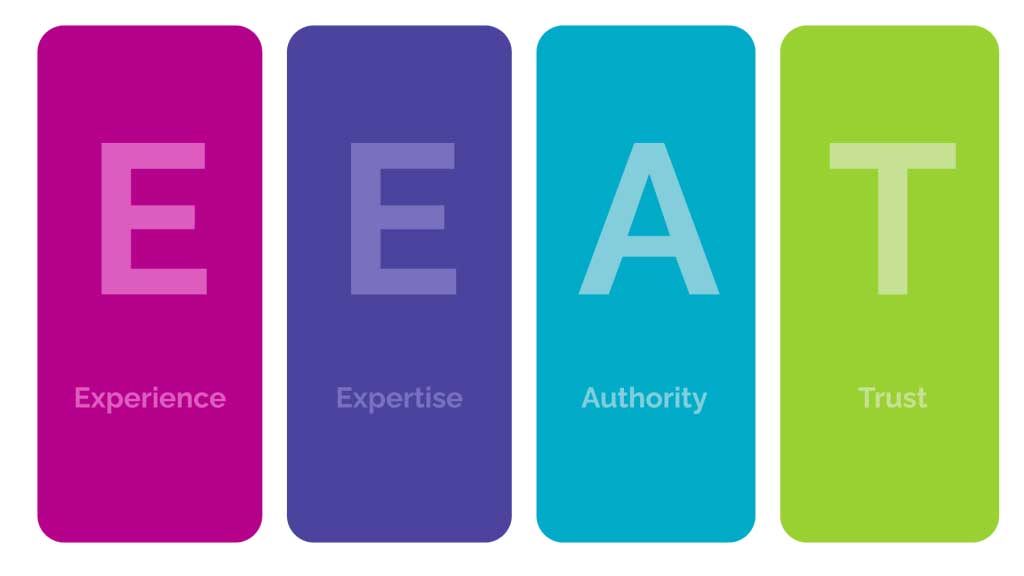
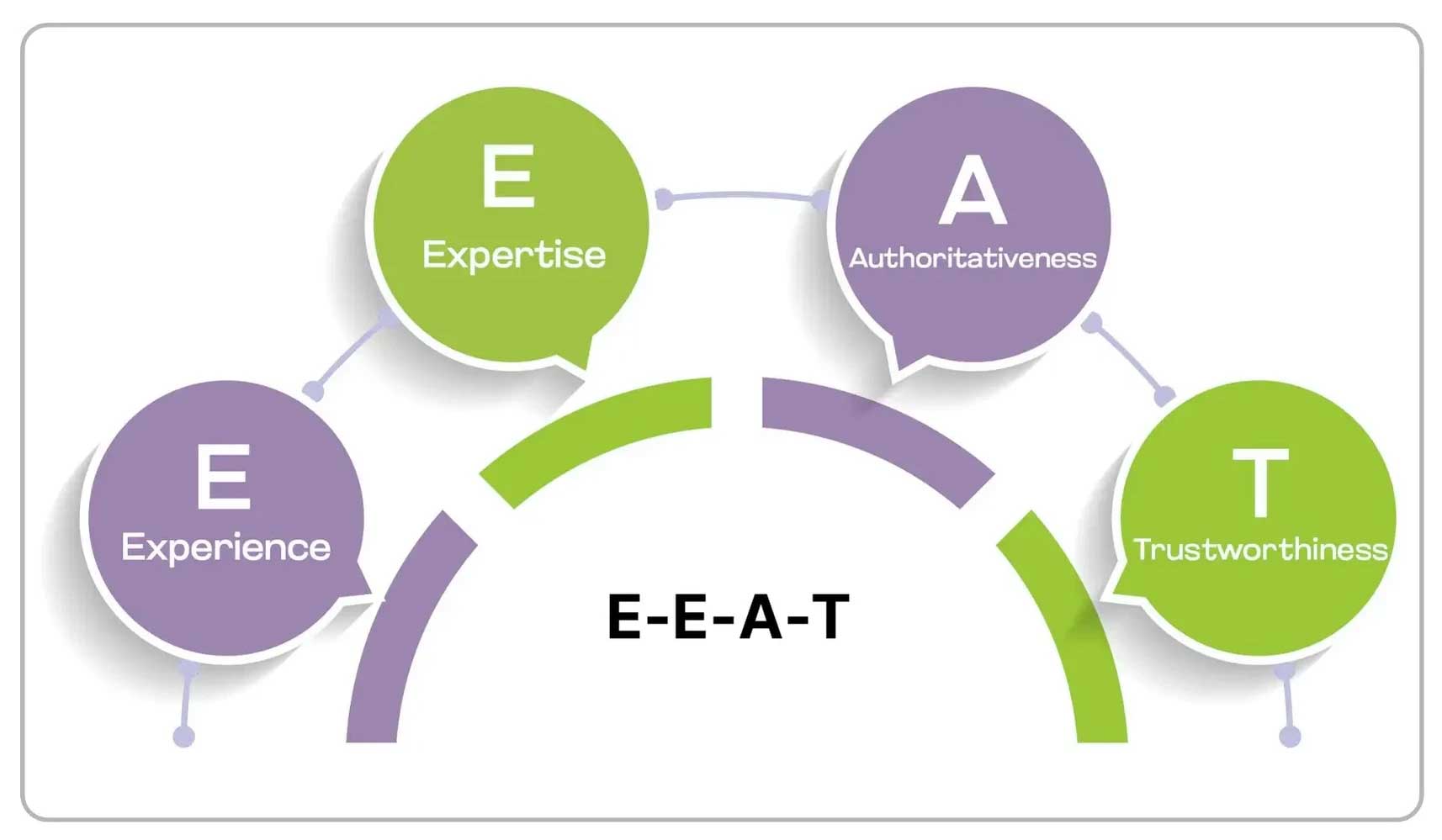
E-E-A-T stands for Experience, Expertise, Authoritativeness, and Trustworthiness. Google’s Search Quality Rater Guidelines use these four pillars to help raters evaluate the quality and trustworthiness of the content or website.
Rather than an absolute ranking factor or a score Google assigns to every website, E-E-A-T is a guidance framework that helps writers and publishers create helpful, reliable content that serves users well.
Let’s explore each pillar of E-E-A-T and how you can use it to create content that has the right potential to perform well on Google.
What is E-E-A-T in SEO?


E-E-A-T combines four key concepts: Experience, Expertise, Authoritativeness, and Trustworthiness. Together, they help answer key questions about the content’s reliability, credibility, and quality.
Experience: Does the creator have relevant experience, or have they interacted with the subject?
Expertise: Does the creator have relevant knowledge or skills?
Authoritativeness: Is the website recognised as a reliable source on the topic?
Trustworthiness: Can users rely on the website, information, and business?
Google first introduced the concept as E-A-T. In December 2022, it added the extra “E” for Experience, highlighting the importance of first-hand knowledge in content creation.
For example, a travel guide written by someone who has personally visited a destination offers far more insight than a generic summary. Similarly, a product review by someone who has actually used it can be far more useful than one based on specifications found elsewhere.
The Four Pillars of E-E-A-T
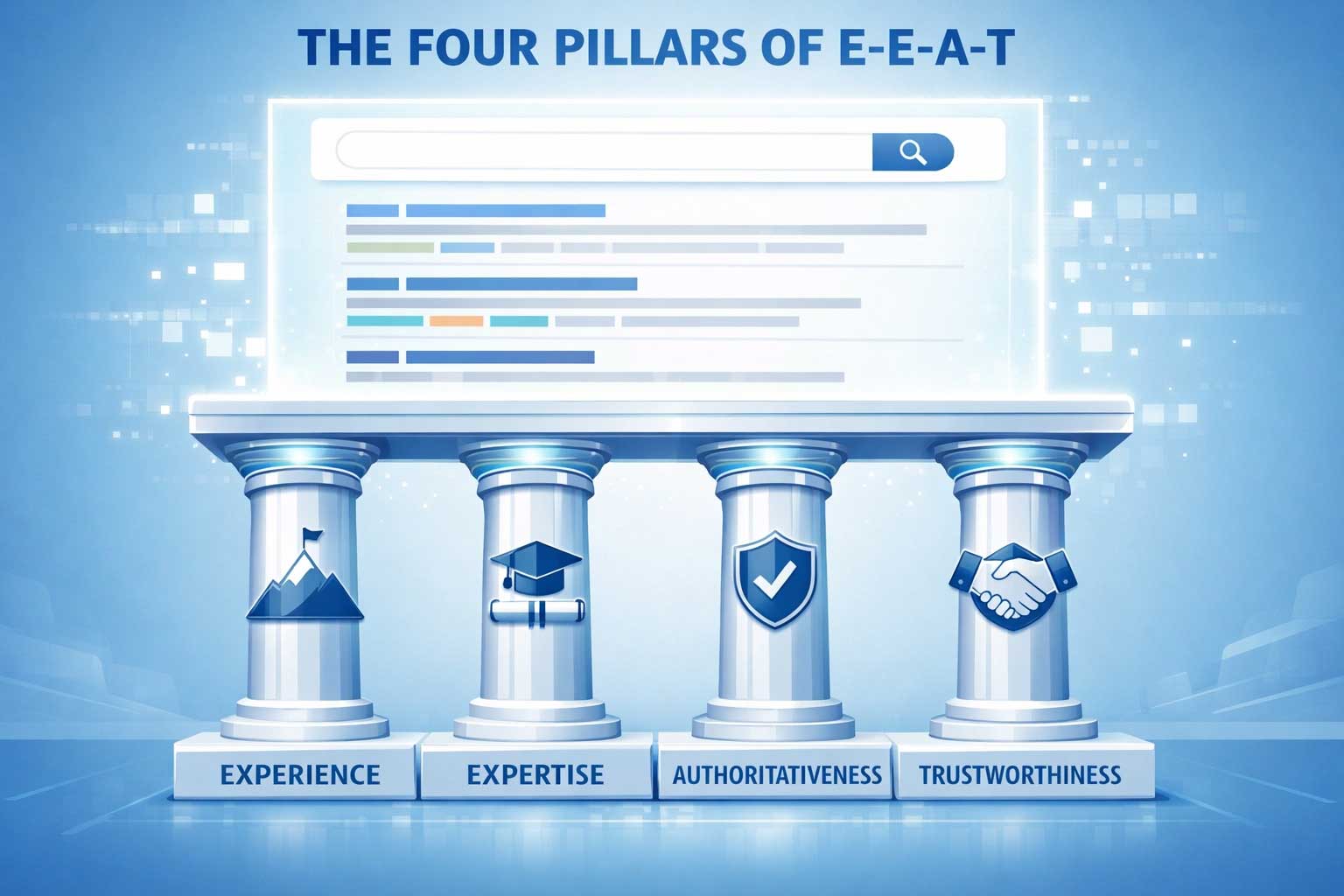

Understanding each E-E-A-T pillar makes it easier to improve content quality, demonstrate credibility, and provide readers with information they can rely on. Each pillar focuses on different aspects of content quality and together provides a useful framework for creating helpful, reliable, and people-first content.
1. Experience

This asks whether the content creator has actually done, used, or seen what they are writing about. First-hand experience matters most for topics such as health, personal finance, legal matters, and safety, or anything that could seriously affect someone’s wellbeing or livelihood.
For example:
- A camera review by a photographer
- A hotel review by someone who actually stayed there
- A traveller sharing first-hand experience about the destination
- A recipe from someone who cooked it
- A repair guide from someone who has fixed the problem
The goal is to make the content more valuable and useful, and to demonstrate genuine involvement with the topic.
How to Demonstrate Experience
Instead of repeating general information available online, add details that show genuine involvement with the topic.
To demonstrate experience, you can include:
- Practical examples
- Original observations
- Original photos, tests, screenshots, or demonstrations
- Real experience
- Real process or workflow
- Case studies
- Lessons learned from first-hand experience
2. Expertise


Expertise refers to knowledge and skills on the particular subject or topic. This asks whether the writer has the knowledge and skills to cover the topic accurately. For topics like money, health, or safety, where it could impact someone’s well-being or livelihood, it is especially necessary.
For example, a medical article requires careful attention, qualified expertise, and reliable sources, as it can affect a person’s well-being.
How to Strengthen Expertise
Expertise comes from formal training or long-term practical work. The key to demonstrating expertise is depth and accuracy.
To strengthen expertise, consider including:
- Author biographies
- Author names
- Areas of experience
- Professional qualifications where relevant
- Links to professional profiles
- Relevant credentials
- Editorial review information
- References to reliable sources
Expert content combines relevant knowledge with accurate, helpful information.
3. Authoritativeness

Authoritativeness is about reputation and becoming a recognised source. It demonstrates whether a creator, website, or organisation is recognised as a reliable source within a particular subject area.
You can’t declare authority — it is developed through consistent evidence of knowledge, reputation, and recognition through mentions, citations, links from respected publications, speaking invitations, awards, and genuine reviews.
Ways to Build Authority
To build authority, create a strong content ecosystem around your core subject.
For example, if you have a digital marketing website, you can publish useful resources covering:
- SEO fundamentals
- Technical SEO
- Keyword research
- Content strategy
- External and internal linking
- Link building
- Search intent
- Analytics
- Conversion optimisation
Connect these pages through internal linking so search engines and users can understand how the topics relate. Building topic depth instead of content volume creates a logical content network that helps users and search engines understand how your expertise and resources relate.
4. Trustworthiness

Trust is the most important E-E-A-T pillar. Google’s guidelines specifically emphasise trustworthiness, as the other three qualities feed into this. It demonstrates that users can safely rely on the information, website, or organisation behind a result.
Trust involves factors such as accuracy, honesty, transparency about who runs the site, clear contact information, secure browsing, and fair treatment of visitors.
How to Build Trust Signals for SEO
To build trust signals, first make important information easy to find. Secondly, your website should clearly communicate:
- Who created the content
- Who operates the website
- What the website is about
- How to contact the business or organisation
- How products or services work
- When content was published or updated
- Relevant policies and disclosures
Transparency reduces uncertainty and builds trust. Therefore, businesses should have an About Us page, Contact page, and physical business information where appropriate. Add customer service information, clear service descriptions, and a privacy policy, terms and conditions, and refund or cancellation information where relevant to build trust signals.
What Are Trust Signals in SEO?
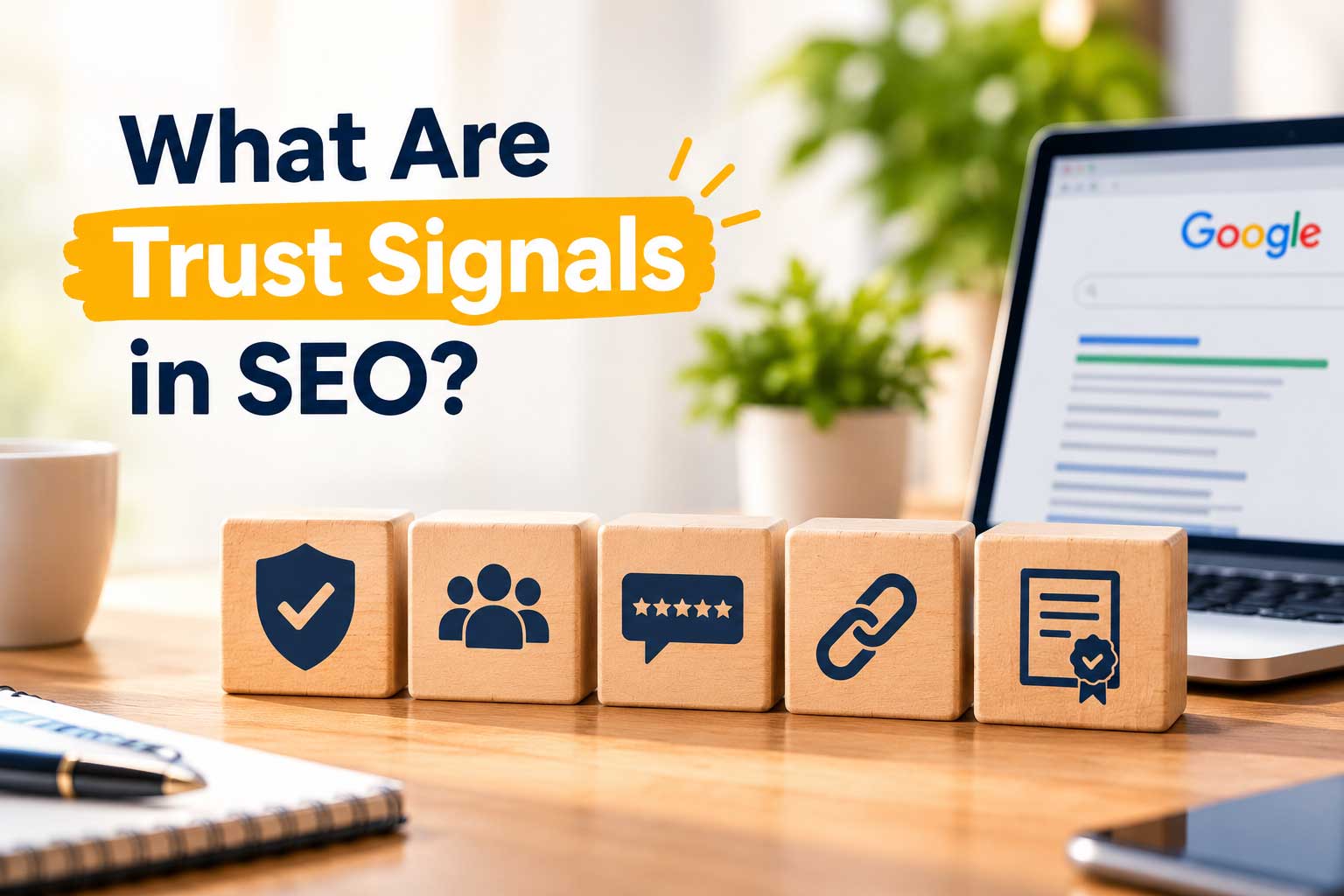
Trust signals are elements or cues that help users and Google determine whether a website, business, author, or piece of content is credible.
Some of these signals relate directly to the content, while others communicate the credibility of the organisation behind the website.
| Trust Signal | What it demonstrates |
| Author bio | Who created the content |
| Credentials | Relevant qualifications or experience |
| Original research | First-hand knowledge and evidence |
| Citations | Where important information comes from |
| About page | Who operates the website |
| Contact information | How users can reach the organisation |
| Updated dates | Whether information has been maintained |
| Editorial policy | How content is created and reviewed |
| Reviews | Customer experiences and reputation |
| Case studies | Evidence of real-world work |
| Clear policies | Transparency around website practices |
| Secure website | Provides a safer browsing experience |
Not every website requires every signal. A website’s purpose and topic largely determine the right signals for that site.
E-E-A-T Checklist to Improve Search Visibility

Note that E-E-A-T is not a single ranking factor. You can’t fix it with one plugin, and Google doesn’t publish an E-E-A-T score. Instead, focus on practical steps that strengthen your content and website’s credibility, transparency, and usefulness.
Here is a quick checklist to improve E-E-A-T:
- Add clear author information
- Show first-hand experience
- Cite reliable sources
- Keep content accurate and updated
- Create a strong About Us page
- Make contact information easy to find
- Publish original research and data
- Strengthen internal linking
- Build a consistent content strategy
How to Create an E-E-A-T Content Workflow

Instead of treating E-E-A-T as a final checklist, build it into your content process.
Step 1: Choose a Topic
Pick the topic based on a genuine audience need rather than a keyword alone.
Step 2: Identify the Required Expertise
Ask yourself what level of knowledge the subject requires.
Step 3: Add First-Hand Insights
Add examples, testing data, or original observations wherever possible.
Step 4: Add Reliable Sources
Use credible primary and secondary sources to support or verify important claims.
Step 5: Create Helpful Content
Cover the topic appropriately and answer the main question clearly before expanding into related information.
Step 6: Add Author and Review Information
Increase transparency by adding author and review information where appropriate.
Step 7: Fact-Check
Review dates, names, statistics, claims, and examples.
Step 8: Improve User Experience
Use visuals, headings, tables, examples, internal links, and clear navigation where appropriate.
Step 9: Update When Required
Update and revise important pages when information, statistics, or data changes.
Step 10: Evaluate and Learn
Measure engagement, conversions, returning users, customer feedback, and questions users have to learn and improve.
Frequently Asked Questions About E-E-A-T
What does E-E-A-T stand for?
E-E-A-T stands for Experience, Expertise, Authoritativeness, and Trustworthiness. It’s the framework that Google uses in its Search Quality Rater Guidelines to judge whether content and websites are credible and useful.
How can you improve E-E-A-T quickly?
There’s no single shortcut for improving E-E-A-T. However, making your website transparent and your content accurate could definitely help. Add clear information about the author, demonstrate experience and expertise on the topic, cite reliable sources, and keep information updated.
Is E-E-A-T a direct Google ranking factor?
No. E-E-A-T is not a single ranking factor or a score that Google assigns to websites. It’s a guidance framework that helps Google evaluate content quality and helps you create high-quality, people-first content.
Does AI-generated content hurt E-E-A-T?
AI-generated content is not automatically harmful to E-E-A-T. What matters most is the content’s quality, accuracy, originality, usefulness, and purpose. AI-assisted content should be carefully reviewed, fact-checked, edited, and enhanced where appropriate with relevant expertise, original information, or first-hand insight.
How often should I update content for E-E-A-T?
There is no universal update rule or schedule for E-E-A-T. Review content whenever facts, statistics, prices, products, services, policies change, or other important information changes. Focus on making meaningful updates and improvements rather than changing dates simply to make a page appear fresh.
Final Thoughts
E-E-A-T is not a score you can achieve or a single SEO tactic. It is a framework that helps you create quality content by considering some of the many signals Google uses to determine whether pages are helpful and relevant to users. Focusing on these principles encourages you to create high-quality, people-first content that demonstrates experience, expertise, authoritativeness, and trustworthiness.
Overall, the key to creating quality content that aligns with Google’s E-E-A-T principles is to consistently publish accurate, useful, transparent content for real people.
Focus on being genuinely helpful, accurate, transparent, and easy to trust, and you’ll be better aligned with the qualities Google looks for in helpful, reliable content that ranks well.