


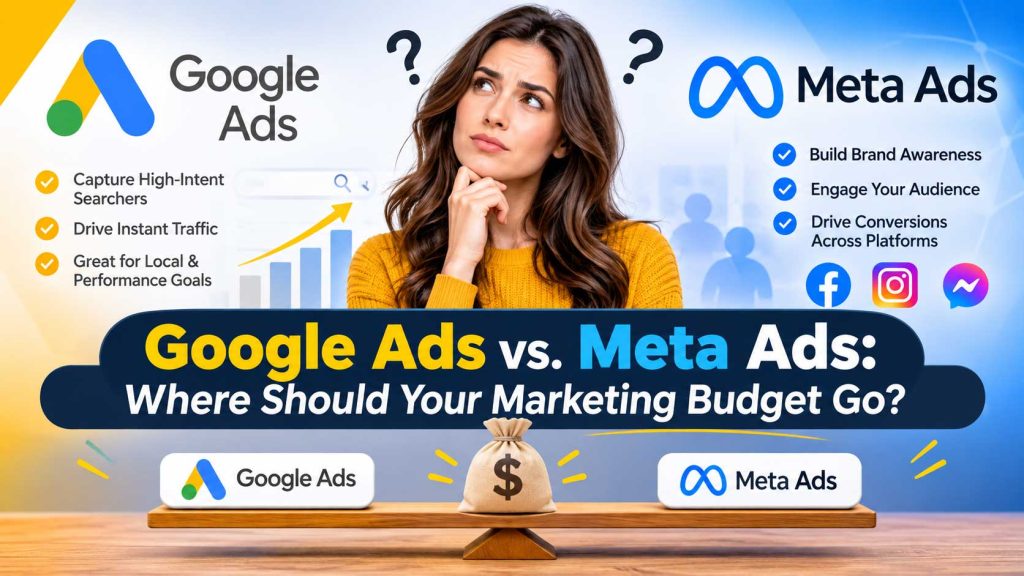
Every business starting with paid marketing faces this question: should you spend your budget on Google Ads or Meta Ads? The answer isn’t simply about which platform is better, but which one matches your customers’ buying mindset.
Both platforms offer powerful advertising opportunities, but they work differently and serve different purposes when it comes to customer intent. Google Ads helps you connect with people actively searching for your products or services, while Meta Ads lets you reach potential customers on platforms like Facebook and Instagram.
So, which one deserves your advertising budget?
The answer depends on your business goals, target audience, industry, and how customers make purchasing decisions. Let’s compare Google Ads vs. Meta Ads to understand where each platform works best and how to invest smarter.
What Are Google Ads?
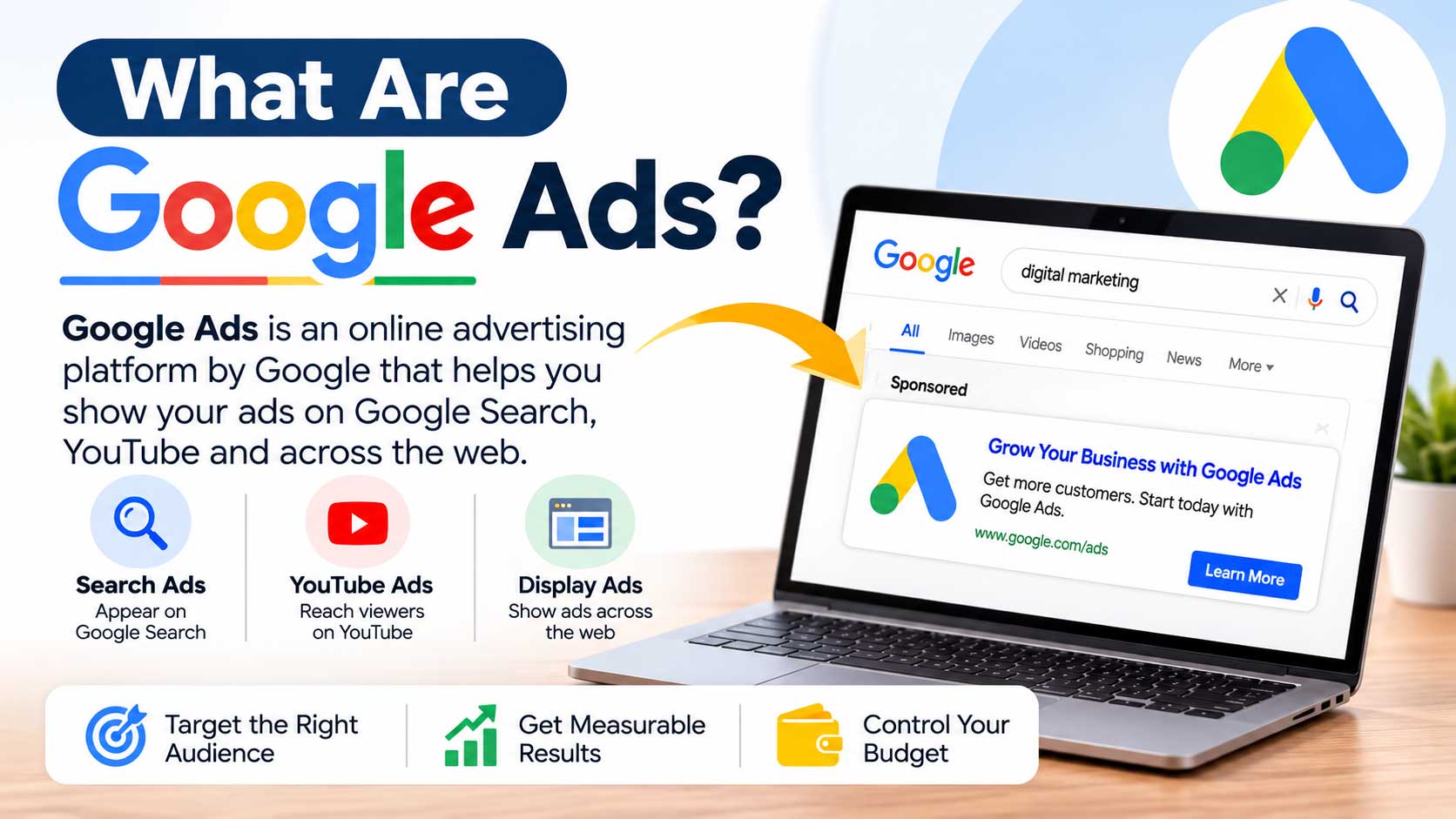

Google Ads lets businesses display ads across Google’s advertising network, including Google Search, YouTube, websites, apps, and other placements. Your ads appear when users search for products, services, or solutions related to your business.
One of its biggest advantages is its focus on search intent. A relevant Google Search ad can capture existing demand and help your business reach potential customers when they are already looking for what you offer.
Google Ads is particularly useful for:
- Promoting products and services.
- Generating leads from high-intent searches.
- Reaching customers actively looking for solutions.
- Driving website traffic and online sales.
- Reconnecting with previous website visitors through remarketing.
Local service businesses, high-intent e-commerce stores, SaaS companies, educational institutions, healthcare providers, and appointment-driven businesses can particularly benefit from running Google Ads.
What Are Meta Ads?


Meta Ads allow businesses to display ads across Facebook, Instagram, Messenger, and other eligible placements.
Unlike Google Search ads, which target people based on what they are searching for, Meta Ads help businesses reach audiences based on factors such as demographics, interests, behaviour, and audience signals.
For example, a clothing brand can promote its latest collection to people interested in fashion, even if they are not actively searching for new clothes.
Meta Ads is particularly useful for:
- Building brand awareness.
- Promoting new products.
- Reaching specific audience segments.
- Generating interest and engagement.
- Retargeting potential customers.
- Driving purchases through visual advertising.
Google Ads vs. Meta Ads: Key Differences
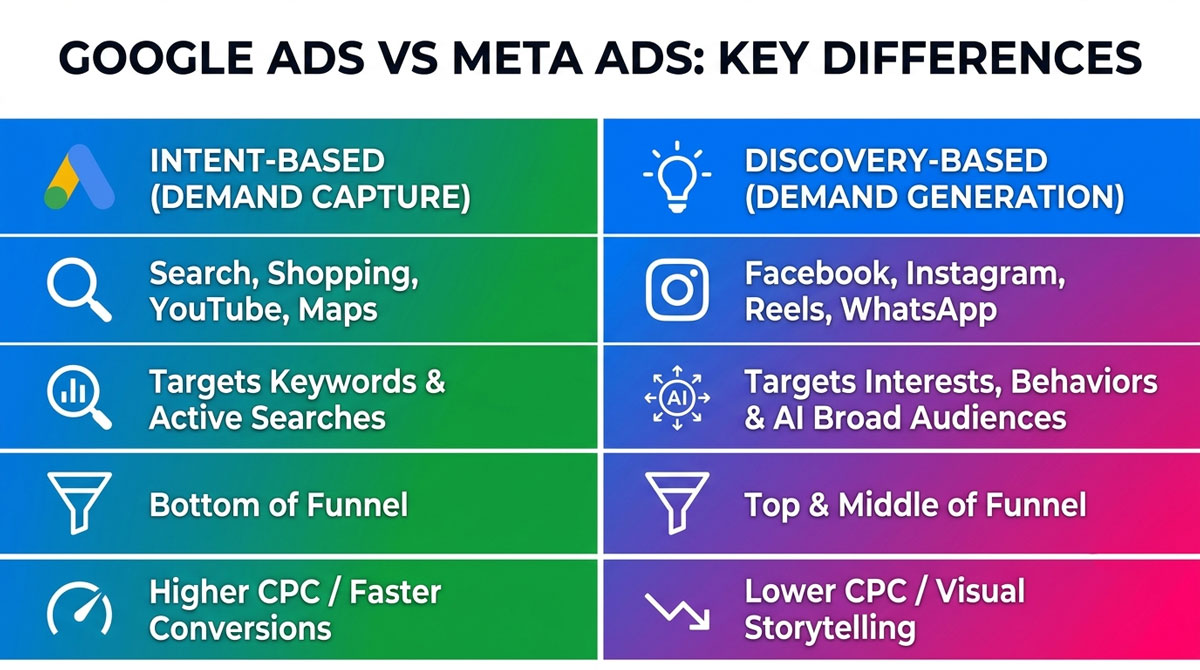

Although both Google Ads and Meta Ads help businesses attract customers, their advertising approaches differ. Here are some of the key differences.
| Key Differences | Google Ads | Meta Ads |
| Main approach | Captures existing demand | Creates and develops demand |
| Targeting mechanism | Keywords, search intent, location, and audience signals | Demographics, interests, behaviours, and audience signals |
| Ad formats | Search, display, video, shopping, and more | Images, videos, carousels, stories, and reels |
| Creative requirements | Vary by campaign type: Search ads are primarily text-based | Strong visuals and engaging creative are often important |
| Customer intent | Often captures active search intent | Can reach both new audiences and people already familiar with your brand |
| Best for | Reaching people actively searching for solutions | Reaching people who may be interested in discovering products |
| Common goals | Leads, sales, and website traffic | Awareness, engagement, leads, and sales |
How Do Costs Compare?
When choosing between Google Ads and Meta Ads, budget is often the deciding factor. However, neither platform is automatically cheaper or more profitable.
Google Ads commonly uses a pay-per-click model for Search campaigns, where you pay when someone clicks on your ad. Costs depend on factors such as keyword competition, industry, location, ad quality, and bidding strategy.
For example, keywords related to financial products, insurance, and legal services can be highly competitive. Businesses dealing in these industries may need a larger budget to compete for valuable searches.
By contrast, Meta Ads costs depend on factors such as audience competition, objectives, placements, creative quality, and bidding performance.
If you’re also comparing paid advertising with organic search, understanding the differences between SEO and PPC can help you make a more informed decision about your overall marketing budget.
When Should You Invest in Google Ads?
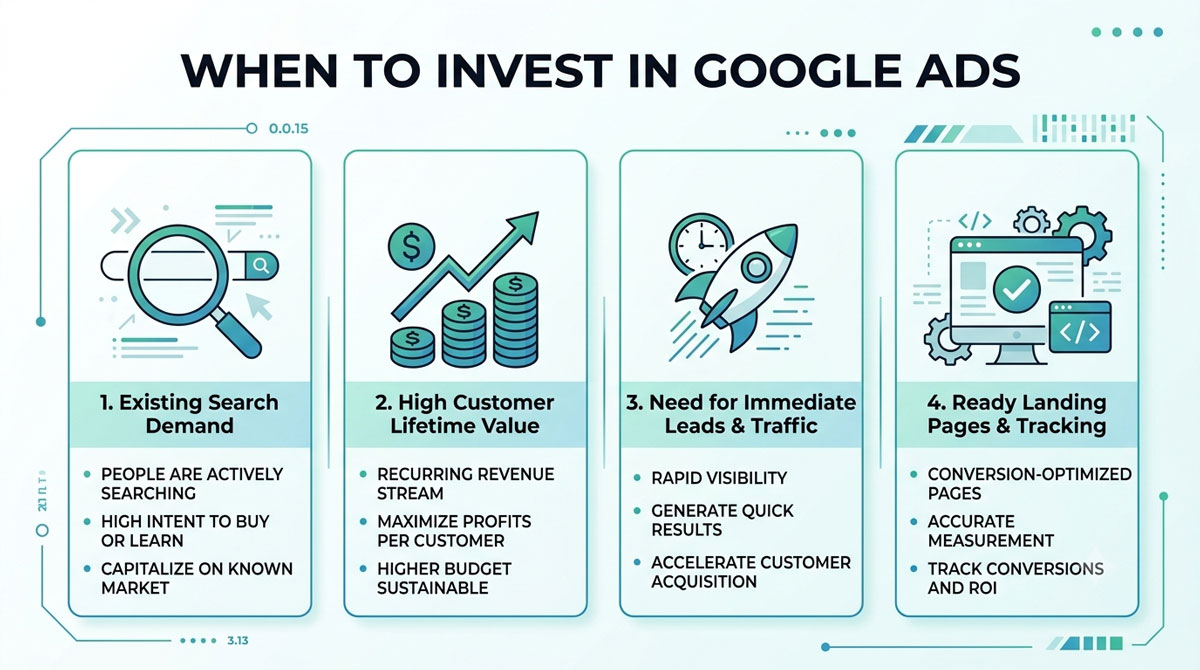
The right answer depends less on the platform and more on how much you’re spending and what you need back. Consider giving Google Ads a large share of your budget when customers are already searching for the products and services your business offers.
For example, if you offer a service people are actively searching for, want high-intent leads, or operate in a competitive local market, then investing in Google Search campaigns can be a smart choice.
Google Ads can be particularly effective for:
- Local service businesses
- Professional services
- B2B companies
- High-intent e-commerce searches
- SaaS businesses
- Education and training services
- Healthcare and appointment-driven businesses
For these businesses, reaching someone who is already searching for a specific solution can be more valuable than introducing the service to someone who may not need it yet.
When Should You Invest in Meta Ads?
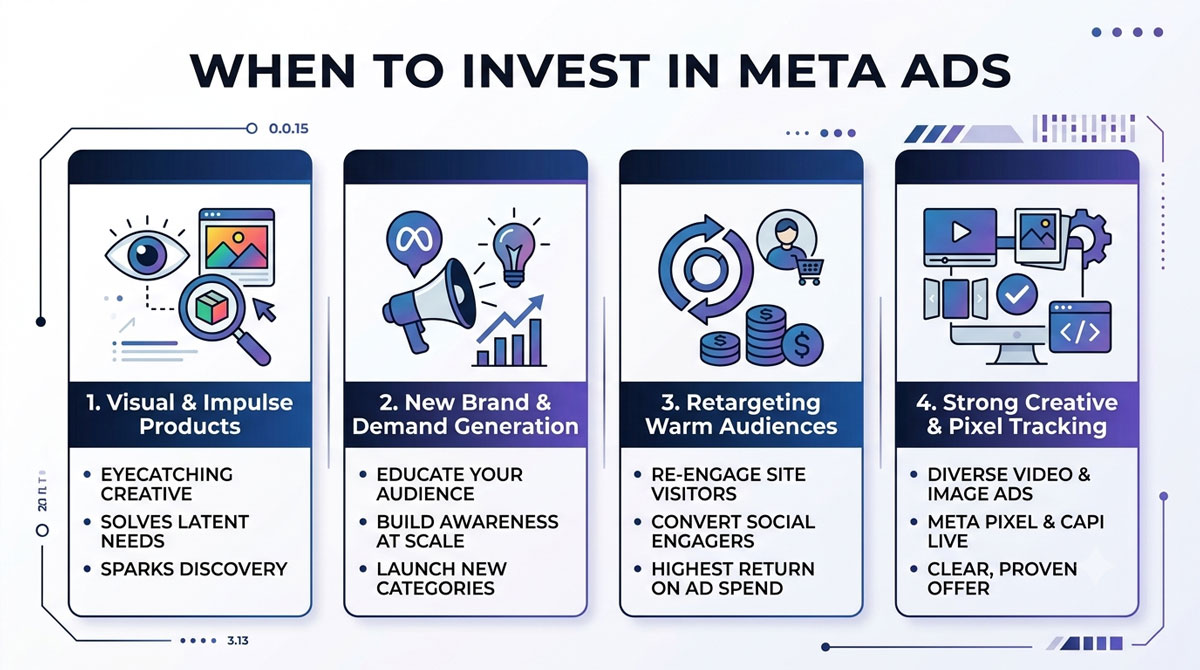
When you sell unique products and need to build awareness, generate interest, or showcase products visually, Meta Ads is a better choice.
For example, a fashion or skincare brand can showcase its products through Instagram Reels, Facebook video ads, and lifestyle images. These advertisements can demonstrate product features, share customer experiences, and encourage people to explore the brand.
Meta Ads is particularly effective for:
- Fashion
- Beauty and skincare
- Food products
- Baby products
- Home décor
- Fitness products
- New e-commerce brands
- Events and entertainment
Meta Ads are also useful for businesses that want to build an audience over time rather than depend entirely on customers actively searching for their products.
When Should You Use Both Google Ads and Meta Ads?
In many cases, using both Google Ads and Meta Ads together supports a stronger digital marketing strategy. This allows your business to reach potential customers at different stages of their buying journey.
While Google Ads can connect you with people actively searching for products or services, Meta Ads can introduce your brand to potential customers. Together, they can support both customer discovery and purchase decisions.
For example, if you run an online furniture store:
- Meta Ads can help you introduce your furniture collection through lifestyle images, videos, and product demonstrations.
- Google Ads can help you reach people searching for specific products.
- Meta retargeting can help reconnect with people who interacted with your brand.
This strategy helps your business reach potential customers before they are ready to buy and remain visible when they start comparing options.
Using both Google Ads and Meta Ads together can be particularly useful for:
- Businesses with longer customer decision-making cycles.
- New businesses looking to build awareness and generate leads.
- E-commerce brands selling products that customers research before purchasing.
- Established brands looking to reach new audiences while reconnecting with previous visitors.
Using both platforms to support different parts of your marketing strategy is a smart approach. However, you don’t need to run both from the beginning. Start with the channel that best matches your immediate business goal, understand its performance, and then introduce the second platform when you have a clear reason to expand.
The goal is to make the most of both platforms to improve your reach and generate more leads.
How Should You Divide Your Advertising Budget?
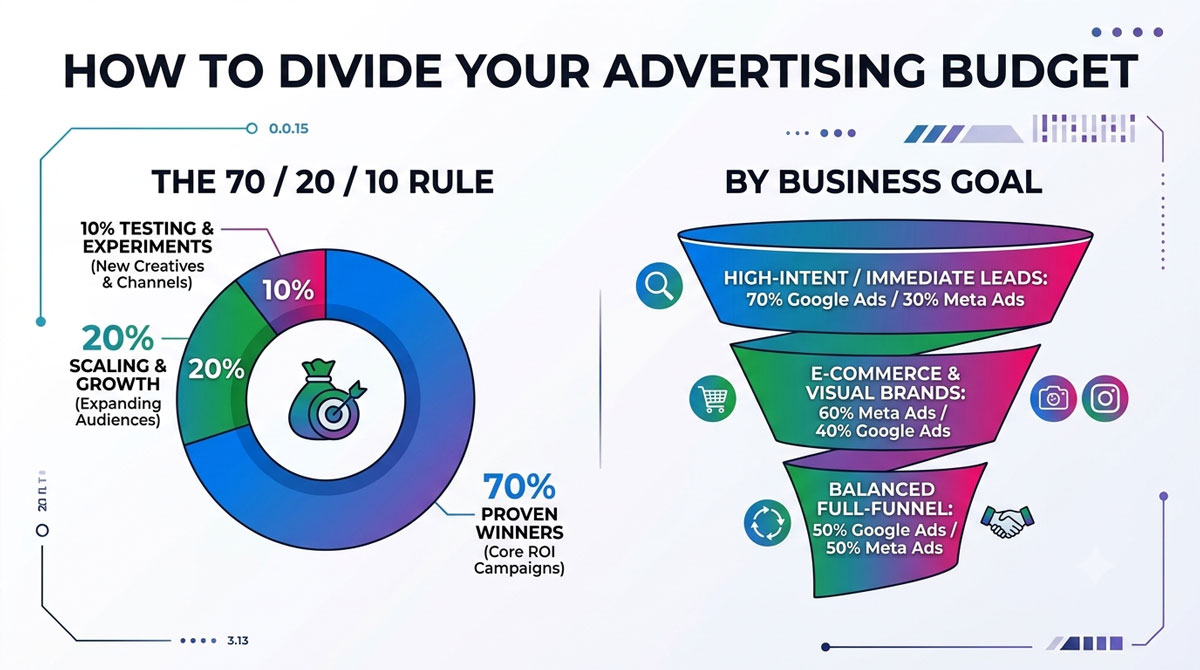
No universal budget split works for every business. Your allocation should reflect your audience, industry, customer journey, and campaign performance.
If you are just getting started, you can consider the following approach:
- For service-based businesses: Prioritise Google Search if customers regularly search for your services. Test Meta Ads to build awareness and generate additional enquiries.
- For e-commerce businesses: Test Meta Ads for product discovery and Google Ads for product searches and shopping-related demand.
- For new businesses: Use Meta Ads to introduce your brand and test Google Ads for relevant searches that already have demand.
- For established brands: Combine both platforms to attract new customers, capture existing demand, and retarget interested audiences.
If you have enough budget to test both platforms and your business already receives relevant search traffic, a starting allocation of 60-70% Google Ads and 30-40% Meta Ads may be worth testing. However, this is just the starting point, not a fixed rule.
If your business relies more on visual discovery, or you sell unique products that customers rarely search for directly, allocating more budget to Meta Ads makes more sense.
Start with a manageable budget, test different campaigns, and review results before increasing your investment. Don’t divide your budget equally just because both platforms are popular. Spend more where you see stronger business results.
Getting clicks is only one part of a successful advertising campaign. Your landing page also plays an important role in turning paid traffic into leads or sales. Learn how custom landing pages and prelanders can support campaign conversions.
Final Thoughts: Google Ads or Meta Ads?
When deciding where to spend your advertising budget, remember that Google Ads and Meta Ads aren’t competing solutions that businesses must choose between forever. They serve different purposes and can complement each other when used strategically.
Google Ads is often the better starting point when customers are actively searching for your products or services. Meta Ads can be a stronger option when your goal is to introduce your brand, showcase products, and create interest among potential customers.
If your budget allows, you can combine both platforms to support different stages of the customer journey by building brand awareness, capturing existing demand, and reconnecting with potential customers.
Ultimately, the right platform is the one that helps you reach the right audience, generate qualified leads, and achieve meaningful returns on your advertising investment.