



Is Your Website Helping You Grow or Holding You Back?
Organizations usually possess very aesthetically pleasing websites. But this might not necessarily translate into effective web design.
Slow load time, mobile optimization problems, and outdated architecture might be steadily losing clients for the organization. Customers don’t mention any such problem; rather, they move to another website altogether.
In the year 2026, just having a professional website won’t suffice. This is because a company’s website may actually impact its lead generation, branding, and revenues.
Why Web Development Trends Matter for Businesses
They are not only about redesign and new technological advances; they are about the shifting nature of user needs and expectations.
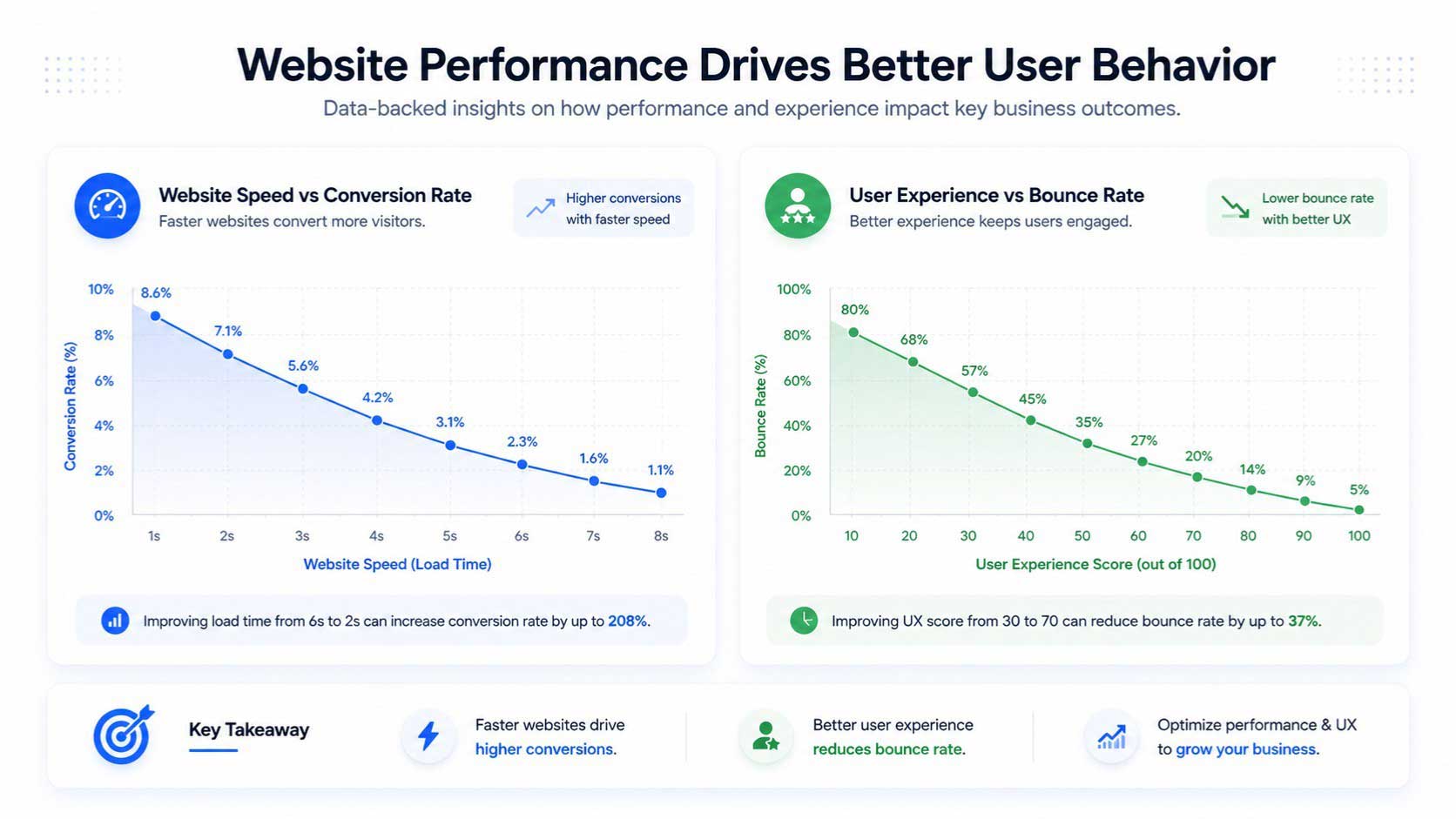

Modern users demand high responsiveness and personalization, and the search engines favor those sites which offer this very thing. Failure to live up to these expectations results in lower rankings and poor conversion.
The companies whose web strategies are constantly revised usually perform better on all fronts, because they cater to user demands.
AI-Powered Websites and Personalization
Artificial intelligence technology has been affecting the interactions between users and websites. Websites nowadays can change their responses in real-time according to the actions and intentions of the visitors. For instance, a returning user will receive different messages than a new user. The artificial intelligence chatbots will be able to answer any inquiries immediately and redirect them to appropriate services and solutions.
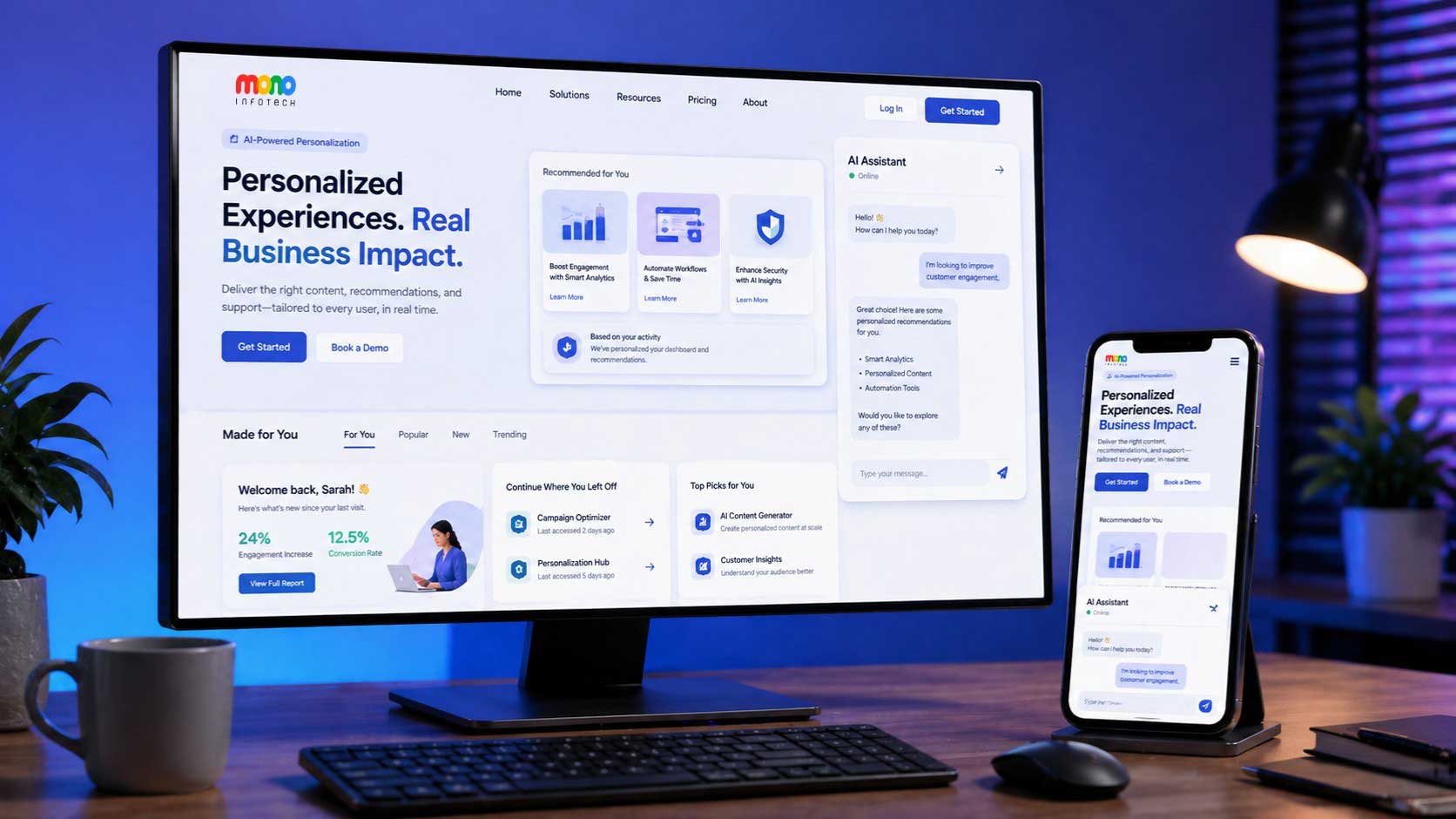

Key use cases businesses are actively leveraging:
- Real-time personalization based on user behavior
- AI chatbots for lead capture and qualification
- Predictive recommendations to improve engagement
This level of personalization reduces friction and helps users move faster toward a decision.
Progressive Web Apps (PWAs) and Performance
Modern web designing considers the usability of navigating the website by the users more than designing the website for visual beauty.
Animations and navigation aspects act as a guide for navigating through the website and thus reduce confusion and improve the user’s experience on the website.
However, overusing animations and design aspects affects the site’s performance negatively and makes it difficult for users to use the website.
Where PWAs make the biggest impact:
- Faster loading compared to traditional websites
- Smooth navigation with minimal lag
- Offline access for better usability
This directly improves session duration and reduces bounce rates.
Voice Search and Changing Search Behavior
More people use conversational search. They use voice search and conversational keywords to perform searches, particularly local and service-based ones.
That is why creating content around question-oriented topics becomes relevant. It also becomes relevant to optimize voice search to improve SEO in general.
The business entities that will take advantage of this trend can gain high-intent searchers that their competitors will overlook.
Mobile-First Experience as a Standard
Mobile-first is no longer optional; it’s the baseline.
Most businesses still rely on responsive design, but true mobile optimization goes beyond that. It focuses on usability, speed, and interaction specifically for smaller screens.
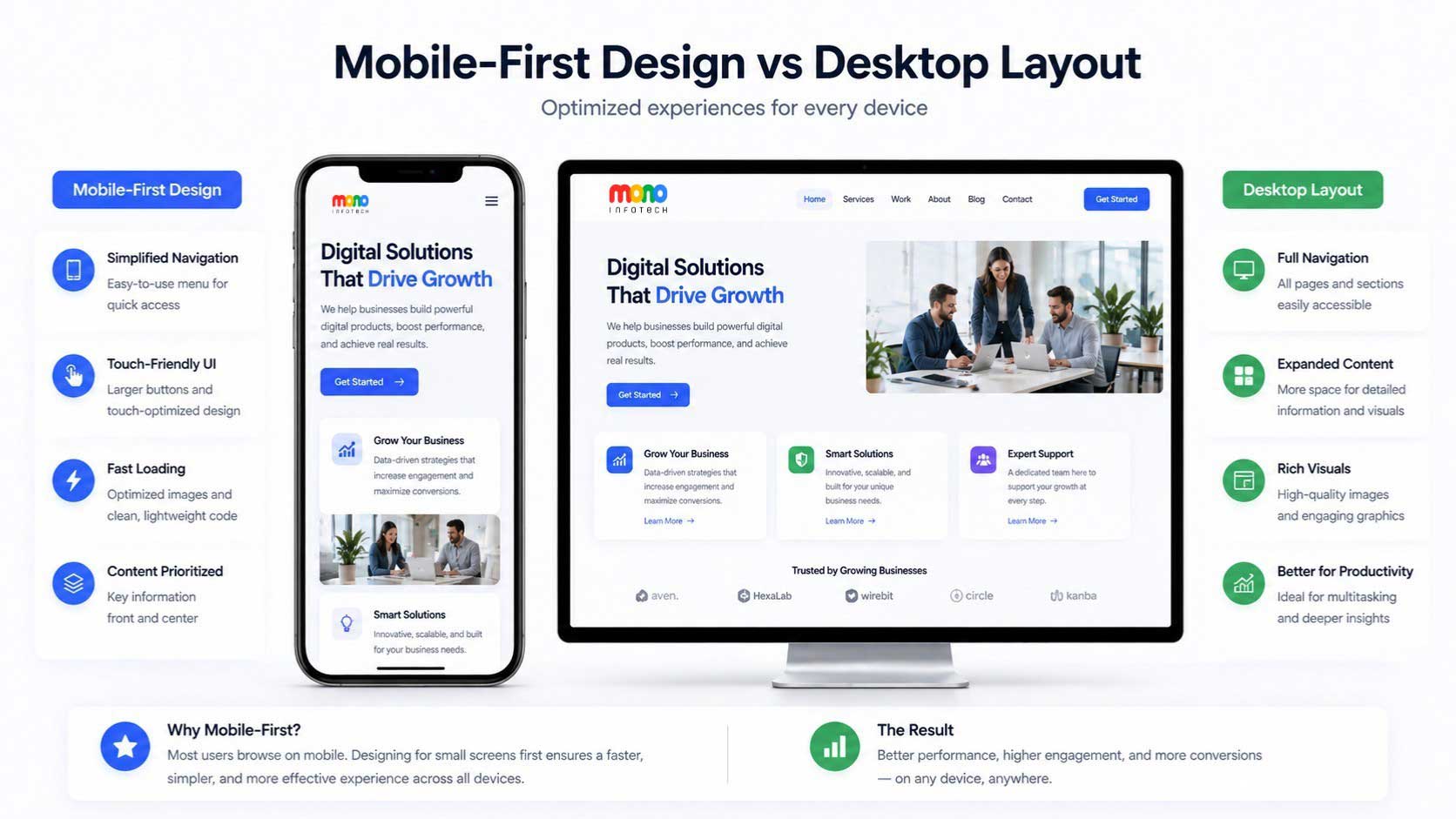
Critical mobile factors that affect performance:
- Page load speed on mobile networks
- Clean and simple navigation
- Touch-friendly UI elements
Even small friction points on mobile can significantly impact conversions.
User Experience, Interaction, and Visual Feedback
In today’s time, when creating a website, much attention is paid not only to its appearance but also to how the user will navigate this website.
Navigation and animations are two aspects of web design that help a visitor explore a website.
It should be noted that excessive use of animations and designs can have a negative impact on a website.
Website Security and Trust Signals
Trust and security have a direct correlation between them. If the website is secure, users will be assured that the information will be safe, and it is particularly necessary when asking about services and conducting any transaction.
The basic level of security measures include SSL certification, secure form submission, and timely updates. In addition, proper and professional layout also plays an important part.
It is much easier to attract users on a secure and trustworthy website.
Cloud Infrastructure and Scalability
When a business expands, the websites will require improved performance as a result of increased traffic.
A website that is backed up by cloud technology will have enhanced efficiency in handling high traffic loads, such as those experienced during marketing campaigns.
In the absence of efficient infrastructure, even the best websites may not survive.
Core Web Vitals and SEO Performance
Google’s ranking systems now heavily consider user experience metrics. Core Web Vitals measure how quickly a page loads, how stable it appears, and how fast users can interact with it.
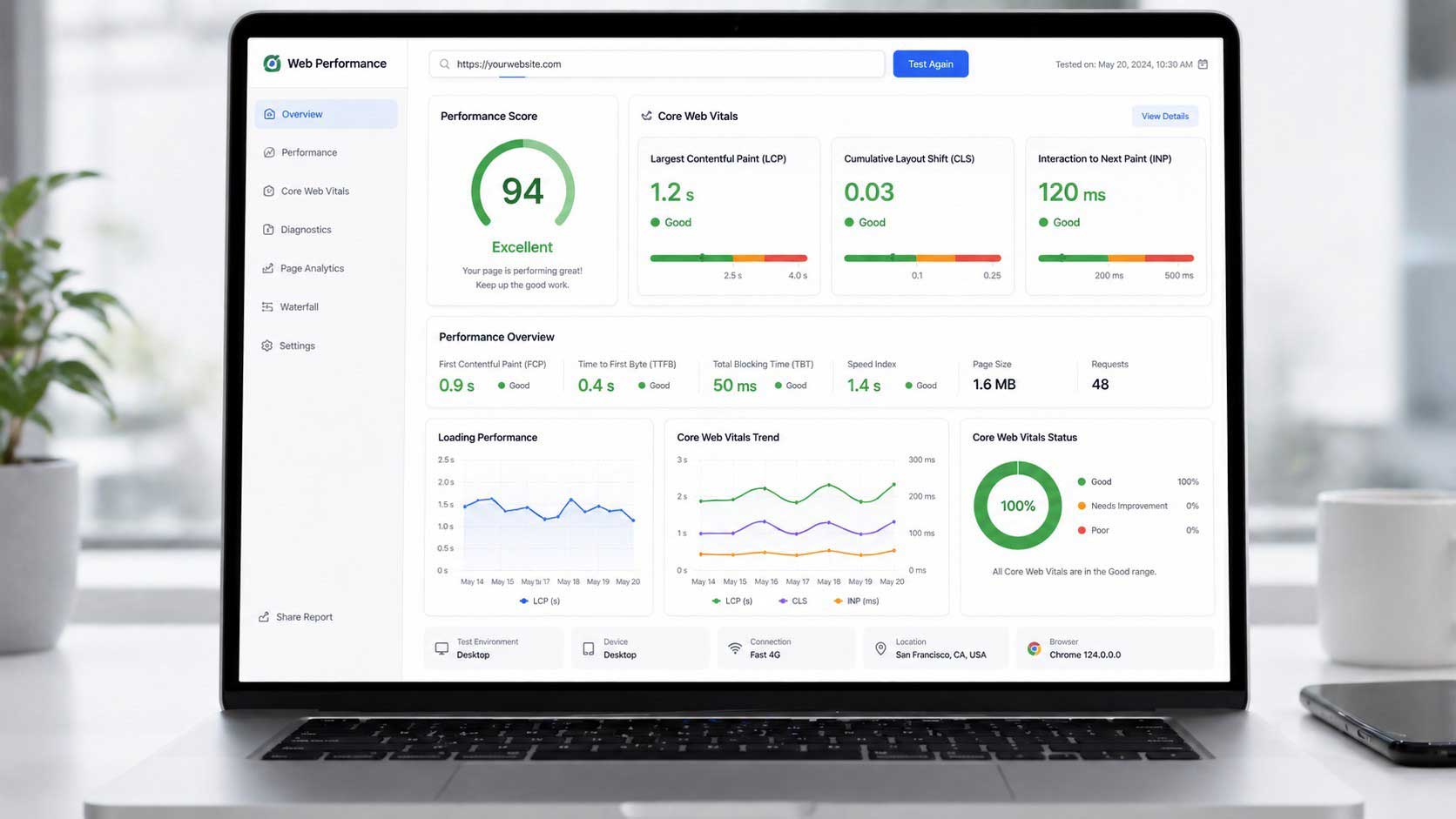
Improving these metrics not only helps with search engine rankings but also enhances overall usability. Faster websites tend to retain users longer and convert more effectively.
Common Mistakes Businesses Still Make
Many companies spend money on rebranding and feature additions without fixing any underlying performance problems.
Concentrating exclusively on design, neglecting mobile optimization, and even adding too many features often result in poor website performance and user experience.
The important thing is not to apply everything, but rather focus on changes that affect performance and conversion.
How to Approach Web Development in 2026
A practical approach starts with evaluating the current website’s speed, usability, and conversion flow.
From there, businesses should focus on improvements that align with their goals, whether that’s lead generation, user engagement, or search visibility.
Working with experienced web development experts helps ensure that technical decisions support business outcomes, not just aesthetics.
Conclusion
Web development in 2026 is less about trends and more about performance, usability, and user intent.
Technologies like AI, PWAs, and cloud infrastructure are valuable but only when implemented with a clear strategy.
Businesses that treat their website as a growth tool, rather than just an online presence, are the ones that see consistent results.
FAQs
Which web development trend has the biggest impact on conversions?
Website speed, mobile optimization, and user experience have the most direct effect on conversion rates.
Are there any web technologies required for every business?
No, not all. The attention needs to be paid only to those which positively influence performance and usability.
How often should a website be updated?
Most business websites benefit from performance and UX updates every 6–12 months, depending on growth and competition.
“If your website isn’t aligned with these trends, it may already be costing you potential customers.”