


If you have run paid advertising or affiliate marketing campaigns, you’ve likely come across the terms prelander and landing page and wondered whether they are the same thing. Although people sometimes use them interchangeably, they aren’t. They serve different roles and purposes in the customer journey and can help you improve your results.
Understanding the difference between a prelander and a landing page can help you build a more effective marketing funnel and choose the right page structure for your campaign.
In this blog, we will explore how prelanders and landing pages work, their main differences, and how to choose the right approach for your campaign.
What Is a Prelander?
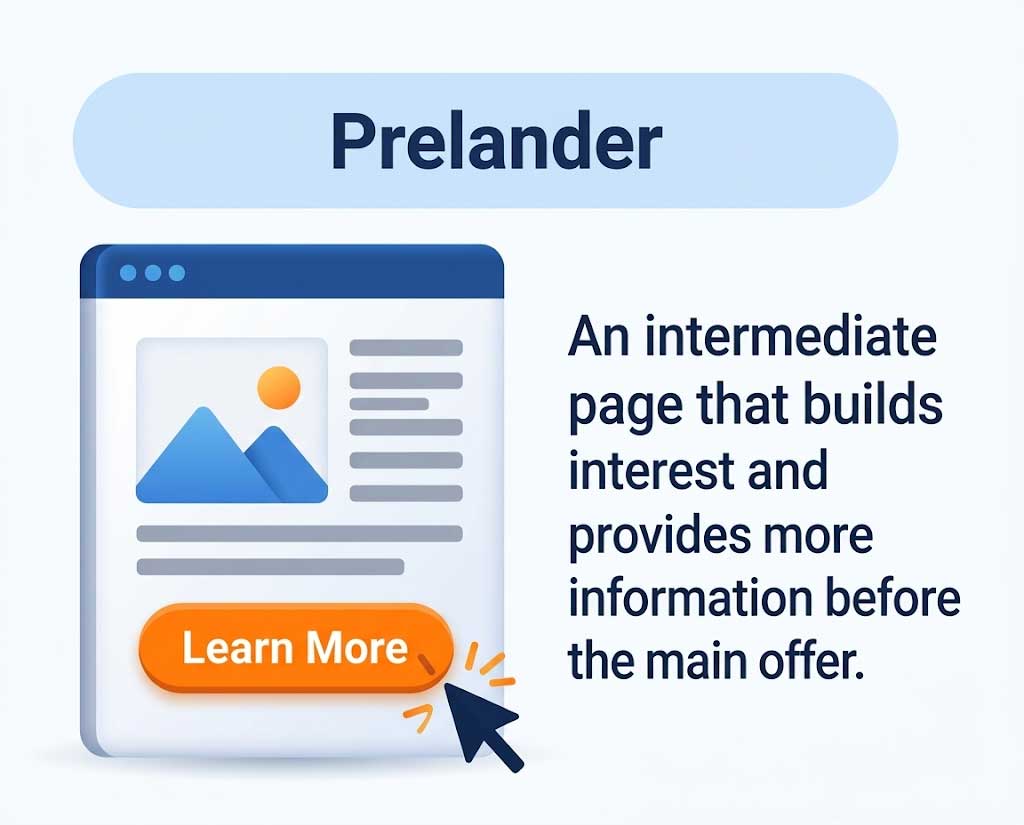

A prelander, also known as a pre-landing page, is an intermediate page between an advertisement and the main offer or landing page. Its purpose is to introduce a product or service, provide useful context, and build interest to help visitors decide whether an offer fits their needs before they continue.
Commonly used in affiliate marketing and paid advertising campaigns, prelanders come in different forms, including articles, quizzes, advertorials, review-style pages, and more. They typically include a CTA that directs visitors to the main offer page, where they can learn more or take the next step.
For example, someone experiencing sleep difficulties clicks a product link in an ad. Instead of going directly to the product page, they are taken to an article that explains simple ways to improve sleep and introduces the product as one possible solution. From there, they can click through to the offer page to explore the product or make a purchase.
Common types of prelanders include:
- Advertorials
- Product comparisons
- Informational articles
- Quiz pages
- Product review pages
The type or format of the prelander may depend on the audience, product, and campaign objective. However, the main purpose remains the same: to give visitors more context before they reach the main offer.
For a closer look, read our detailed guide on what prelanders are and why affiliate marketers use them.
What Is a Landing Page?
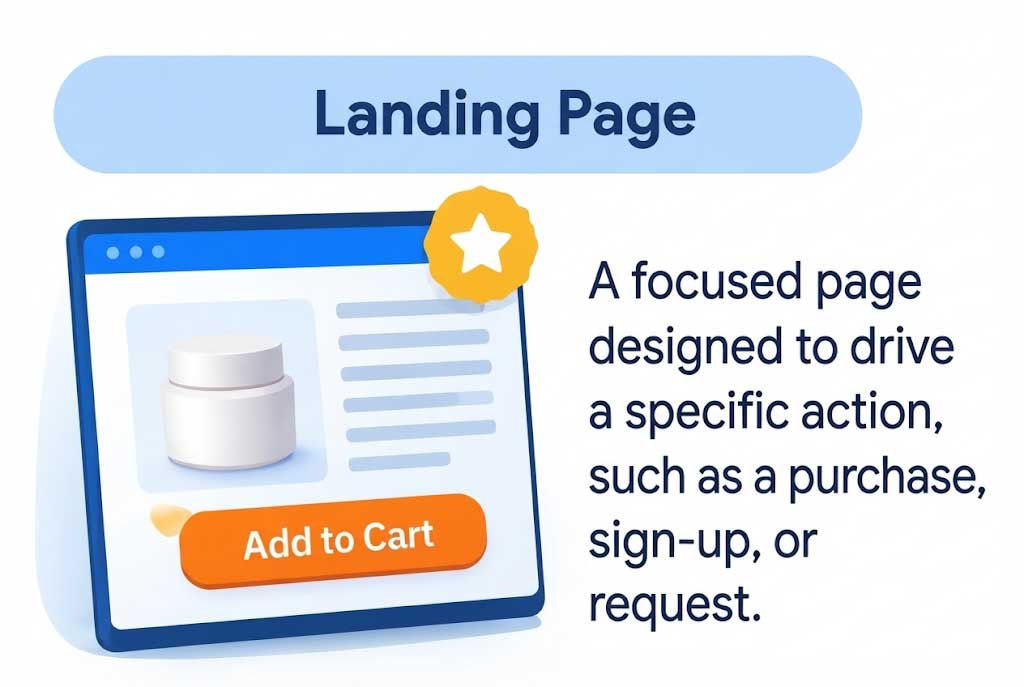

A landing page is a standalone web page designed to encourage visitors to take a specific action. Depending on the campaign, this could mean buying a product, booking a call, submitting a contact form, requesting a consultation, or signing up for a newsletter.
Visitors can arrive at a landing page from an ad, email link, search result, social media post, prelander, or another promotional source.
Unlike a general website page, a landing page focuses on one primary conversion goal. It typically explains the offer, highlights its benefits, answers common questions, and guides visitors toward a clear call to action (CTA).
A well-designed landing page usually includes:
- A clear headline that explains the main offer or value proposition.
- Relevant content that provides important information about the offer to visitors.
- Benefits and features of the product or service.
- Trust elements such as customer reviews, testimonials, guarantees, or relevant credentials.
- A clear call to action (CTA) to direct visitors towards the intended next steps.
- A focused layout that minimises unnecessary distractions and makes the desired action easy to complete.
For example, someone clicks an advertisement for a skincare product and lands on a page featuring the product, its ingredients, benefits, usage instructions, and customer reviews. This page also displays pricing and an option to add the product to the shopping cart.
Prelander vs Landing Page: Key Differences
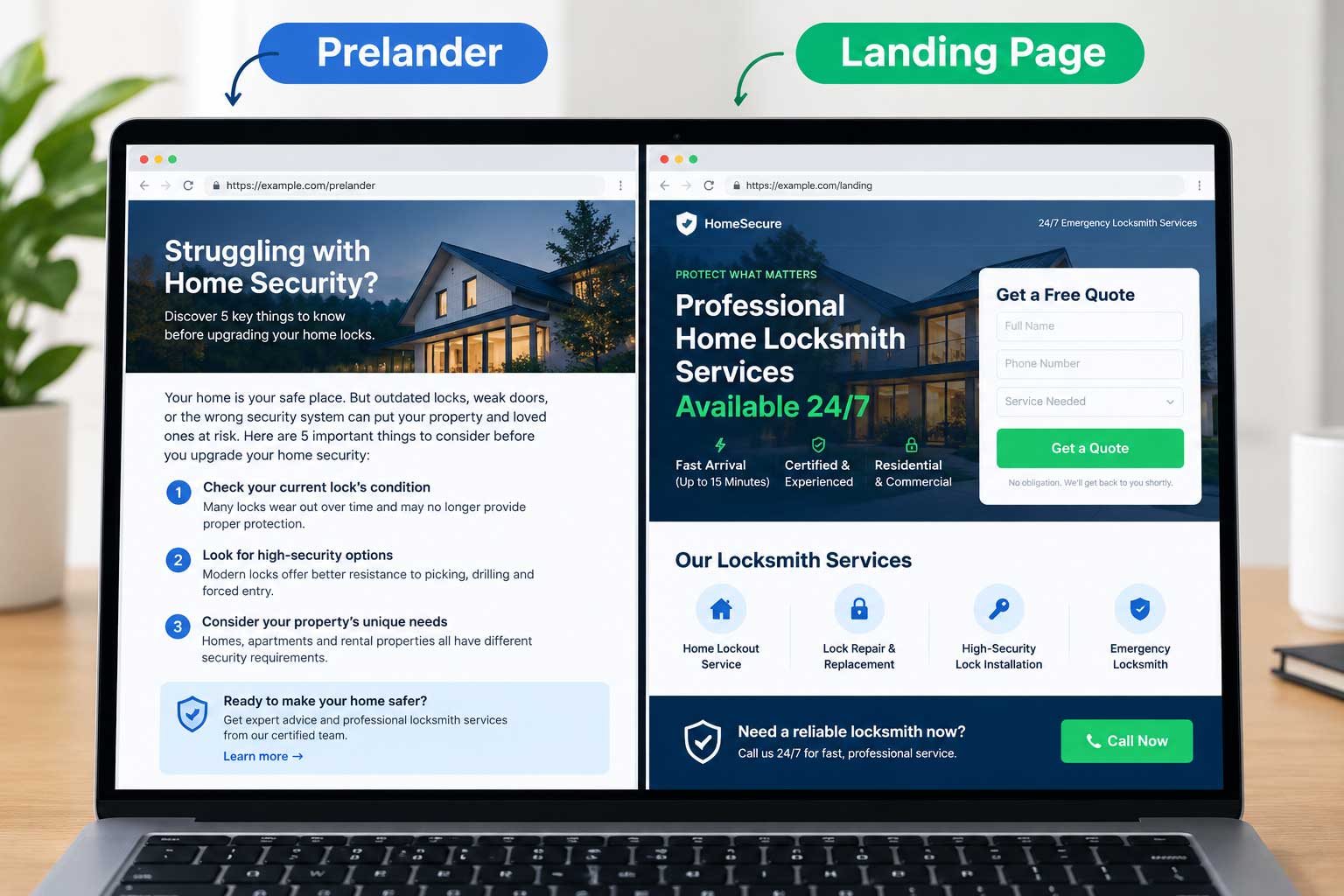

The main difference between a prelander and a landing page is their role in the visitor journey. A prelander warms up and prepares visitors for an offer, while a landing page is designed to encourage them to take action.
| Comparison | Prelander | Landing Page |
| Purpose | Warm up, educate, and provide context for an offer. | Convert (sale, lead, sign-up) |
| Content style | Story, article, quiz, or review | Offer-focused, direct, and conversion-oriented |
| Position in funnel | Before the landing page | After the ad or prelander |
| Call to action | “Learn more” or “See the offer” | “Buy now” or “Get started” |
| Length | Short to medium | Varies, often more detailed |
| Common use | Affiliate marketing and paid campaigns | Lead generation, sales, and registrations |
| Best for | Cold traffic, restricted ad niches | Warm or ready-to-buy traffic |
Some campaigns may use both a prelander and a landing page, while others may not need a prelander at all and can send visitors directly to a landing page. The right approach depends on the offer, audience, traffic source, and campaign objective.
How Do Prelanders and Landing Pages Work Together?
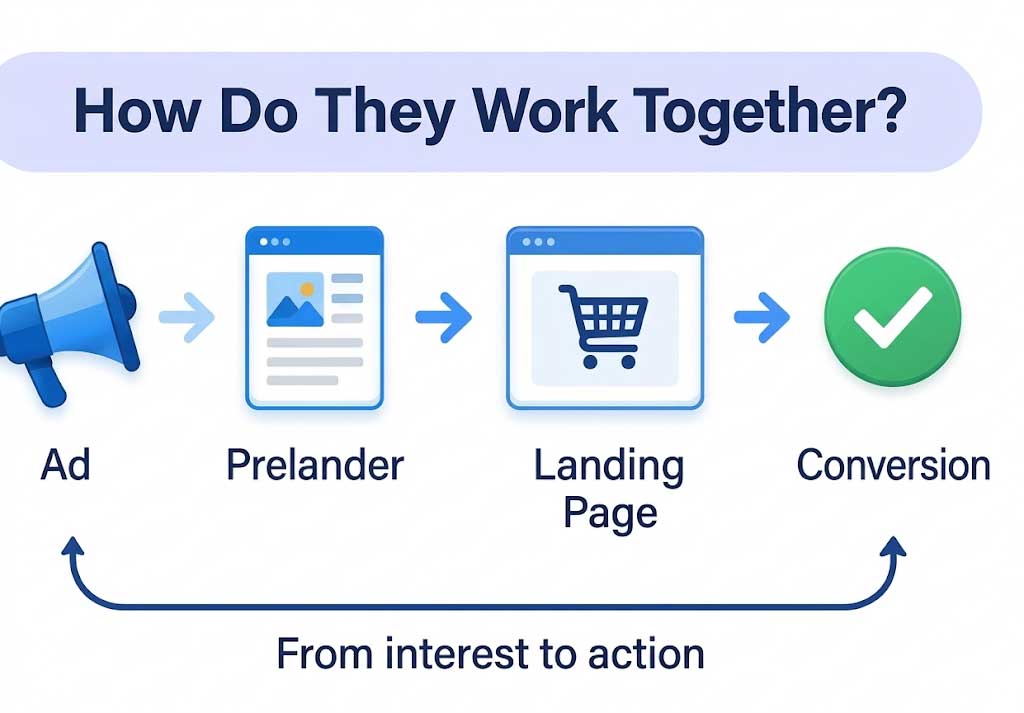

A prelander and a landing page can work as two consecutive steps in a multi-step marketing funnel. The prelander gets visitors interested; then the landing page turns that interest into action. Each serves a different purpose and has a different responsibility, helping guide visitors from initial interest to conversion.
A typical customer journey may look like this:
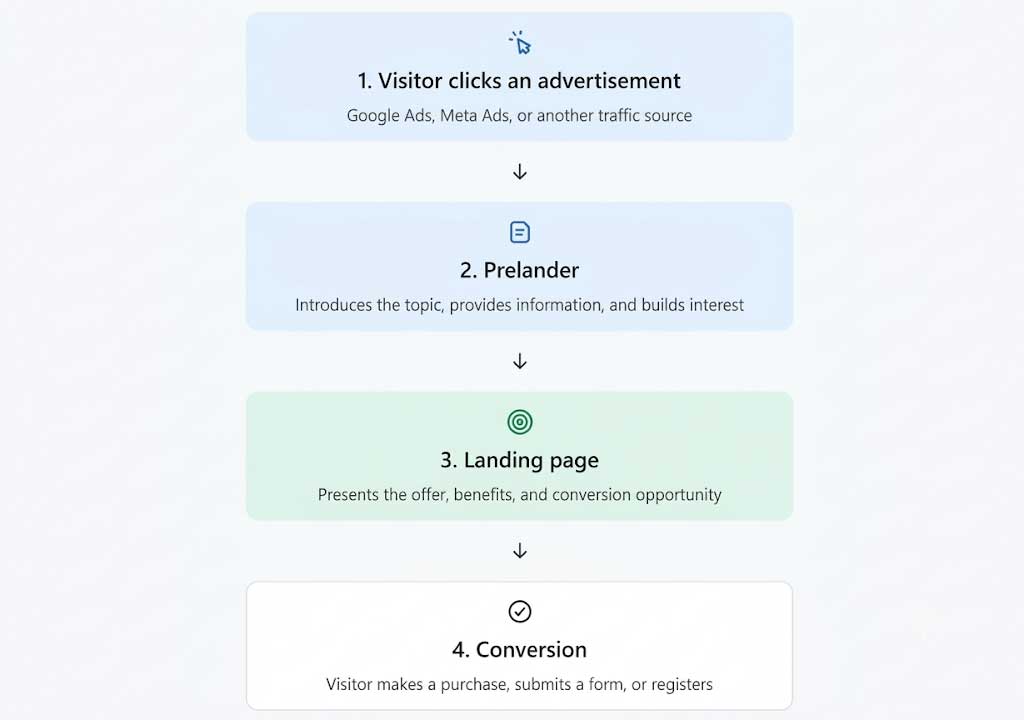

1. Advertisement
A user sees an ad, social media post, or promotional email and clicks it.
2. Prelander
They land on a short article, quiz, or review that talks about the challenges, how the product can help, and its benefits. The page provides context and a clear link to learn more about the product.
3. Landing Page
Visitors who click on the CTA on the prelander are directed to the main offer page or landing page. Here, they can explore the product’s features, pricing, benefits, and other relevant details.
4. Conversion
After reviewing the information, visitors decide whether to buy the product, register for the service, or subscribe to a plan.
This structure works because visitors get an opportunity to understand the topic before reaching the main offer. The prelander explains the problem and introduces the product, while the landing page presents the offer and drives the action. This also filters your traffic: less interested visitors drop off early at the prelander, so the landing page receives more qualified leads.
When Should You Use a Prelander?
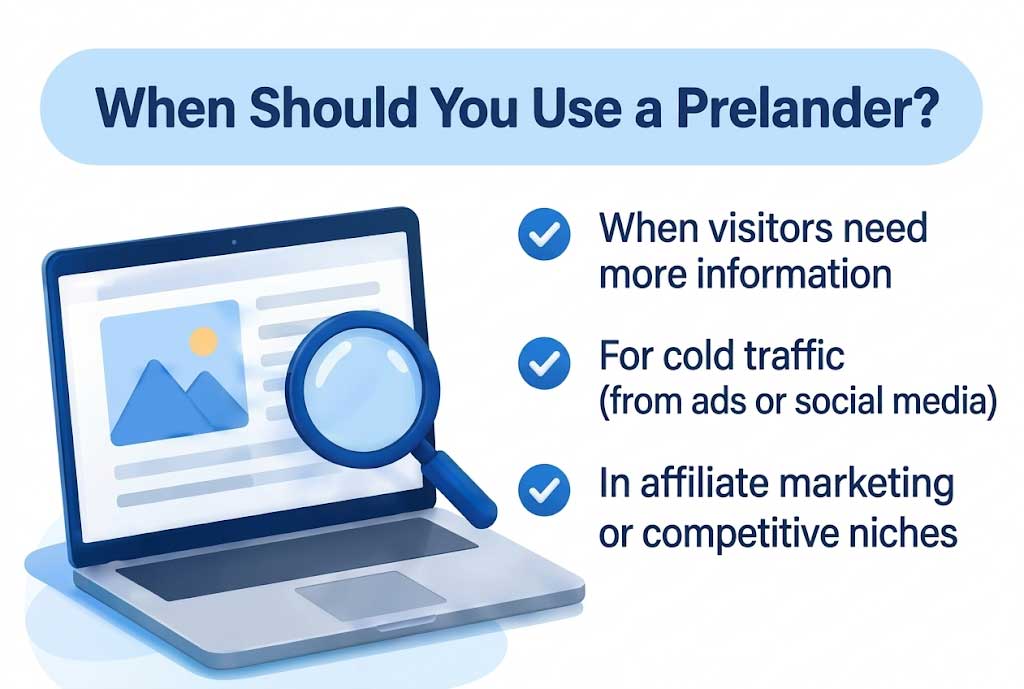

A prelander can be valuable when visitors need additional information or context before deciding whether to engage with an offer.
Here are some situations where using a prelander makes sense:
You Are Targeting Cold Traffic
Visitors coming from social media or display advertising may have little prior knowledge of your product or service. An informative prelander can introduce the problem, explain the solution, and help visitors decide whether they want to explore the offer further.
You Work in Affiliate Marketing
Prelanders are often used in affiliate marketing because they let affiliate marketers introduce and explain an advertiser’s offer before sending visitors to the advertiser’s page.
The Offer Requires Additional Context
If an offer is unfamiliar or needs background information, a prelander can help introduce the topic before visitors reach the main page. It can explain how the product works, highlight relevant features, or answer basic questions.
If you are unsure whether a prelander will be helpful, you can also test different campaign journeys. Comparing a direct-to-landing-page approach vs. a prelander funnel will help you understand which structure performs better for your audience.
However, if the offer is already clear and the landing page includes all the necessary information, you may not need an additional page.
When Is a Landing Page Enough?
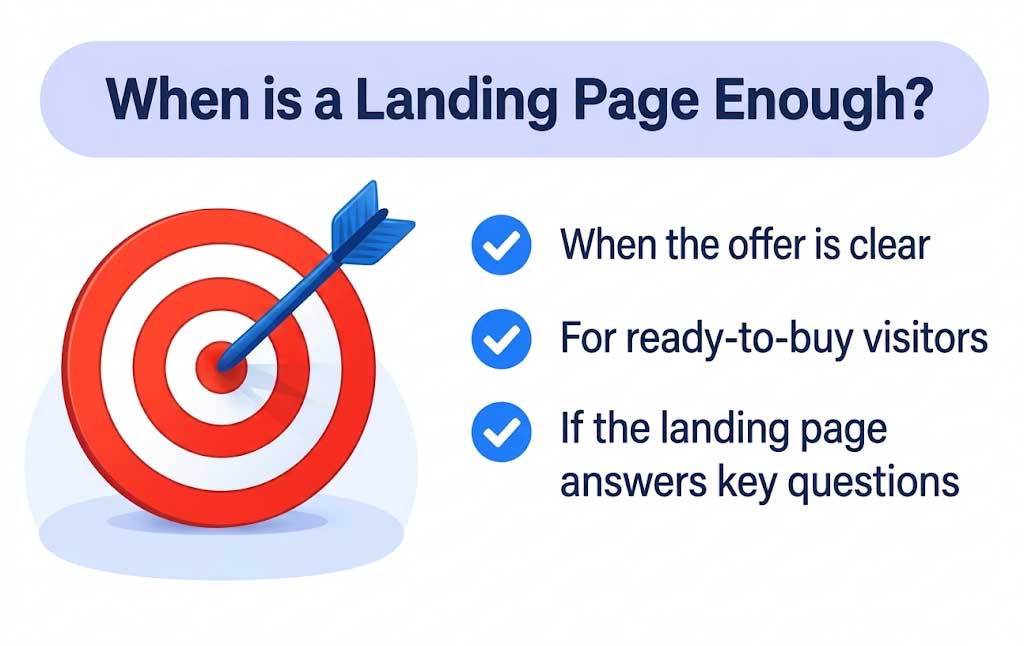

Not every single marketing campaign needs a prelander. In some situations, sending visitors directly to a landing page can be more effective.
A landing page is enough when:
- The advertised offer is easy to understand.
- Visitors already know what they want.
- The campaign targets people with strong purchase or registration intent.
- Adding another page would create unnecessary friction.
- The landing page already answers the visitor’s main questions.
The aim should not be to include as many pages as possible in your funnel, but to determine whether each page serves a clear purpose.
Best Practices to Make Both Work Together
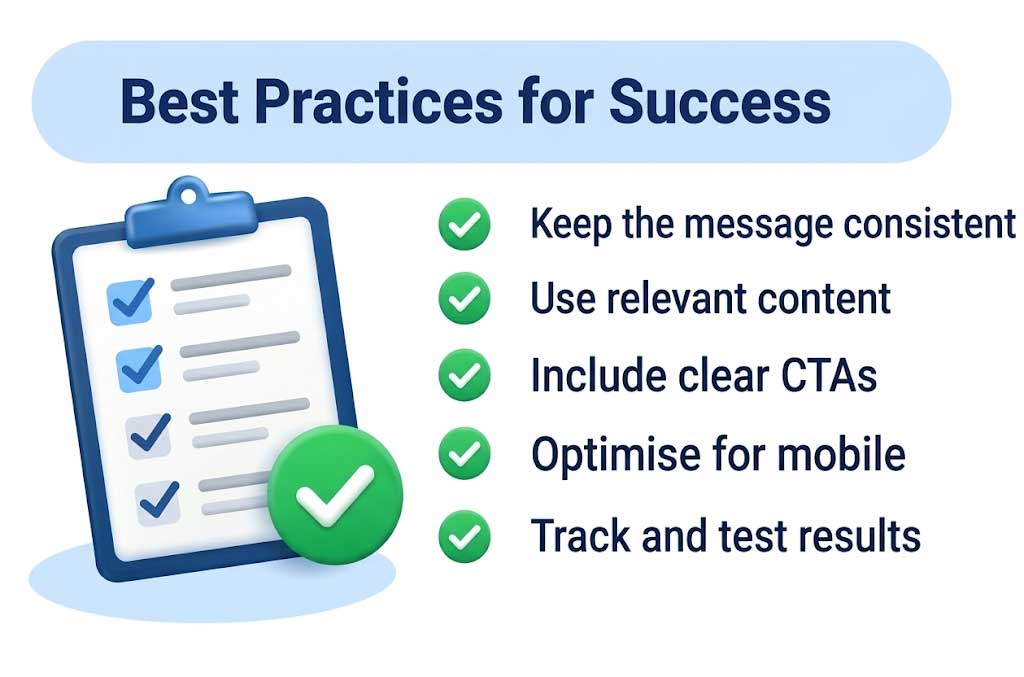

Whether you use a prelander, a landing page, or both, the focus should be on creating a relevant and consistent user experience.
Here are a few practical points to consider:
1. Keep the Message Consistent
Your ad, prelander, and landing page should feel like one continuous story. They should communicate the same offer and avoid exaggerated headlines or claims the next page can’t support.
2. Make the Content Relevant
Focus on information that helps visitors understand the product or service and cut anything that doesn’t.
3. Use Clear CTAs
Make it clear what happens when visitors click a button or link. Keep the wording direct and relevant.
4. Optimise for Mobile Devices
A large share of paid traffic arrives on mobile devices. Make sure the pages load properly, the text is readable, and buttons are easy to use.
5. Measure Campaign Performance
Measure clicks from the prelander to the landing page and conversions on the landing page separately. Track relevant metrics such as click-through rates, bounce rates, and completed actions to understand how each page contributes to campaign performance.
6. Test Different Approaches
Test different headlines, layouts, content formats, and CTAs. You can also compare a direct landing page campaign with one that includes a prelander.
Use the results to understand what works best for your audience and campaign goals.
Frequently Asked Questions
Is a prelander the same as a landing page?
No. A prelander is an intermediate page that provides context, information, or introduces an offer before directing visitors to the main offer page. A landing page is a standalone web page designed to encourage a specific action such as purchasing a product, signing up, or submitting a form. They serve different purposes in a marketing funnel.
Do prelanders improve conversions?
Prelanders can help improve conversions, particularly in campaigns where visitors need more information before engaging with an offer. However, results depend on the audience, product, traffic source, and campaign objective.
Can I skip the prelander?
Yes. If the traffic is already warm, visitors understand the product, the offer is straightforward, or people are ready to take action, a well-built landing page may be enough. If a prelander doesn’t add value to the visitor’s experience, skipping an extra page makes more sense.
Final Thoughts
A prelander and a landing page are different and serve different purposes within a marketing funnel. In short, a prelander prepares visitors to convert, whereas the landing page converts.
Both play a useful role in affiliate marketing and paid advertising campaigns. Together, they can bring more qualified visitors to your offer and improve conversions. However, the right approach depends on the offer, traffic source, audience, and how much information visitors need before deciding.
If you are unsure whether a prelander will benefit your campaign, start with a well-designed landing page and test a prelander to see whether it lifts your results.
Looking to build high-converting prelander and landing pages for your business? Explore Mono Infotech’s affiliate IT services to create effective campaigns that attract, engage, and convert your target audience.